- September 13, 2026

A common misconception in DeFi is that connecting a wallet to a website is the main security decision. It is not. The more consequential decision often comes one step later, when a user approves a token contract to spend assets on their behalf. That approval can remain active after a transaction is complete, after a site has been forgotten, or even after the user stops using a protocol.
This distinction matters because a wallet does not merely store tokens. It also authorizes actions. In the Ethereum and broader EVM ecosystem, token approvals are part of the permission layer that lets decentralized exchanges, lending markets, bridges, and other applications move specified assets. Managing those permissions is therefore closer to managing account access than to clearing a browser cache.
What a token approval actually does
Most widely used fungible tokens follow a common contract pattern. A wallet owner can call an approval function that records an allowance: a particular spender address may transfer up to a specified amount of a particular token from the owner’s address. The spender is usually a smart contract, not necessarily the website a user sees in the browser.
That last point is easy to miss. When a user clicks “Approve” on a decentralized exchange, the approval is generally granted to a contract address. The contract may later use that permission according to its code. The wallet does not automatically know whether the contract will behave safely forever, whether the front end will later be compromised, or whether the user has approved more than the immediate trade requires.
An approval is also different from a completed transfer. Approving a token does not, by itself, move the token. It creates permission for a spender to do so. A later transaction can use that permission, which is why an old approval can remain relevant long after the original interaction.
There is an important limitation here: not every token and application handles allowances in exactly the same way. Some tokens use unusual contract logic, some applications request permits through signed messages, and some interfaces bundle approval and action into a more complex flow. The general principle remains useful, but a reassuring-looking screen is not a substitute for understanding what is being authorized.
The historical shift from convenience to permission management
Early wallet use often encouraged a simple mental model: connect, sign, and transact. As DeFi expanded across Ethereum and other EVM-compatible chains, that model became incomplete. Users began interacting with many protocols, switching networks, and approving assets repeatedly. Convenience favored broad allowances because asking for approval before every transaction adds friction and often requires an additional network fee.
Broad approvals can be efficient, but efficiency creates exposure. If a user grants an effectively unlimited allowance, the security question is no longer only whether today’s swap succeeds. It becomes whether the approved spender remains trustworthy and correctly implemented over time. A bug, exploit, malicious upgrade, compromised integration, or deceptive contract interaction can turn a dormant permission into a source of loss.
This does not mean that every unlimited approval is automatically dangerous. Risk depends on the contract, the asset, the chain, the user’s exposure, and the quality of the application’s controls. The sharper conclusion is that unlimited approval is a trade-off, not a neutral default. It exchanges fewer future confirmation steps for a larger permission surface.
Modern wallet design has increasingly moved toward making that surface visible. For a DeFi user, a useful wallet should help answer three separate questions: what transaction is being submitted, which contract is receiving authority, and what could happen if that authority is misused? These questions are related, but they are not interchangeable.
Why wallet security is more than protecting the seed phrase
Seed phrase protection remains foundational. If someone controls the recovery phrase or private key, they may control the wallet. But a protected key does not make every signed transaction safe. A user can lose funds while holding the key securely if they knowingly or unknowingly authorize a harmful contract action.
This is the difference between key security and transaction security. Key security protects the ability to sign. Transaction security evaluates what a signature authorizes. Strong self-custody requires both.
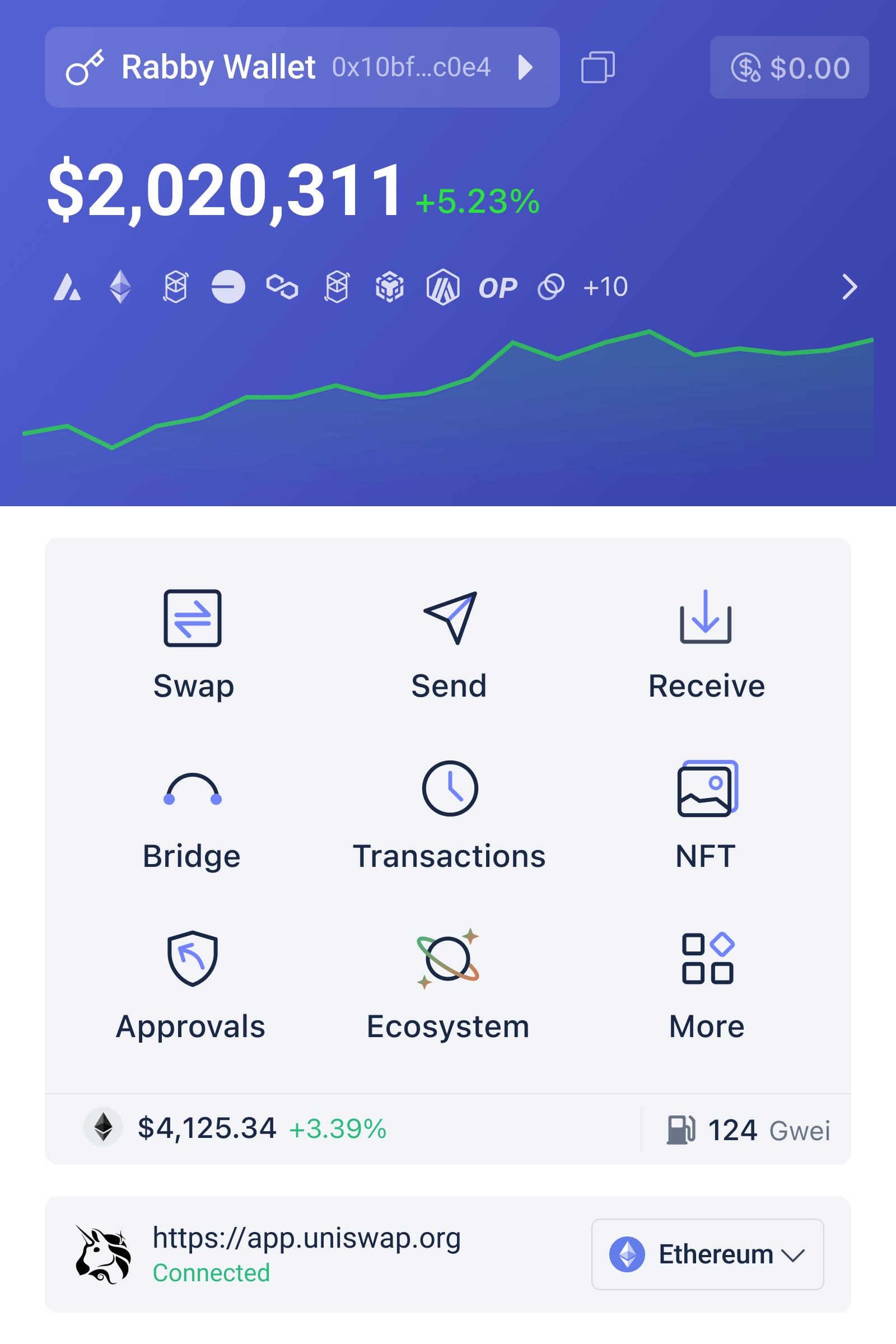
That is where a wallet such as Rabby can be useful as an analysis layer for Ethereum and EVM activity. Users considering the rabby extension download should treat the installation step as the beginning of a review habit, not as a guarantee. A wallet interface can surface transaction details, network context, contract information, and potential warnings, but the user still has to pause when the requested permission is broader than the intended action.
No wallet can prove that an external smart contract will never be exploited. Warnings are signals, not insurance. Contract analysis can be incomplete, token behavior can be irregular, and a legitimate application can still suffer a later incident. The practical value of wallet tooling lies in improving visibility and reducing avoidable mistakes, not in eliminating the need for judgment.
Myth-busting the most persistent approval assumptions
Myth: Disconnecting a website revokes its permissions
Disconnecting a wallet from a website usually changes the connection state in the interface. It does not necessarily remove an on-chain token allowance already granted to a contract. Revocation is a separate action that changes the recorded permission. Users should therefore distinguish between “the site cannot currently see my connected wallet” and “the contract can no longer spend this token.”
Myth: Rejecting a transaction removes an existing approval
Rejecting a new transaction generally means that transaction was not signed. It does not undo an earlier approval. If an approval needs to be removed, the user normally must submit a separate on-chain transaction that lowers or sets the allowance to zero, subject to the token’s implementation.
Myth: An approval only matters for the amount being traded now
An approval may be limited to an exact amount, but many applications request a much larger allowance to avoid repeated approvals. The amount displayed in a swap or purchase is therefore not always the same as the maximum amount the spender could move later. Users should inspect the allowance, not just the current trade value.
Myth: A familiar brand makes every contract interaction safe
Brand recognition is weak evidence about a specific transaction. DeFi interfaces can contain multiple contracts, routing systems, upgrade mechanisms, and third-party integrations. A convincing website can also direct users toward a malicious contract. The relevant question is not simply whether the application looks familiar, but what address is receiving authority and what operation the wallet is asking the user to sign.
A reusable framework for safer approval decisions
A practical framework is to evaluate approvals across four dimensions: scope, duration, exposure, and reversibility. Scope asks which token and which spender are involved. Duration asks whether the permission is likely to remain active for minutes, months, or indefinitely. Exposure asks how much value is held in the wallet. Reversibility asks how easily the permission can be removed and whether doing so requires another transaction.
Consider a US user moving a modest amount of a stablecoin into a lending market. A narrowly sized approval may add friction and another gas payment, but it limits the maximum amount covered by that permission. An unlimited approval may be reasonable for a frequently used, well-understood protocol in a separate wallet with limited funds. The same choice is harder to justify for a rarely used application or a wallet holding long-term savings.
This leads to a useful operational principle: separate activity from custody. A wallet used for experimentation, airdrop claims, new protocols, and unfamiliar bridges should not automatically hold every asset a user owns. Segmentation cannot prevent every mistake, but it can limit the blast radius when a permission, contract, or signing decision goes wrong.
Users should also review old approvals periodically, especially after abandoning a protocol, moving assets between wallets, or interacting with experimental contracts. Revocation is not free in every case; it can require network fees, and revoking a permission does not recover funds already transferred. Still, treating approvals as an inventory rather than a one-time prompt makes the security problem more manageable.
What matters now—and what to watch next
Rabby’s current positioning around Ethereum and EVM chains reflects a broader reality: users increasingly need one wallet interface to make sense of activity across multiple networks and application types. That convenience is valuable, but it also raises the cost of a mistaken assumption. A familiar interface can make cross-chain activity feel uniform even when contract risks, token standards, and transaction mechanics differ.
The next meaningful improvement in wallet security is unlikely to be a single warning label. It is more likely to involve better permission summaries, clearer distinctions between approvals and transfers, stronger contract-context signals, and less confusing explanations of what a signature authorizes. Whether those improvements materially reduce losses will depend on user attention, interface quality, and the ability of analysis systems to keep up with changing contract designs.
For now, the defensible approach is conditional rather than absolute. Use established tools, verify the domain and network, inspect the spender and allowance, keep high-value assets separated from experimental activity, and treat unexpected signature requests as a reason to stop. These habits do not make DeFi risk-free. They make the risk more legible.
FAQ: Token approvals and Rabby wallet security
Should every token approval be revoked immediately?
Not necessarily. Revocation can reduce the risk from unused permissions, but it may require a transaction fee and can add friction when using a trusted protocol again. Prioritize approvals tied to unfamiliar, abandoned, high-risk, or unusually broad contracts, and consider holding only limited funds in wallets used for experimentation.
Does Rabby guarantee that a transaction is safe?
No wallet can guarantee that. Rabby can help users inspect transaction context and identify potential risks, but smart contracts can be complex, upgradeable, compromised, or misunderstood. Treat wallet warnings and simulations as decision support, then verify the application, contract context, network, and requested permission before signing.
What is the single most useful approval habit?
Do not evaluate a transaction only by the amount you intend to spend. Check what continuing authority the transaction grants, to which contract, and for how much. That shift—from “What am I paying now?” to “What permission am I creating?”—is the core mental model for safer DeFi use.
Token approvals are not merely an annoying extra click in the DeFi user experience. They are durable permissions embedded in a system designed to automate financial actions. Once that is clear, wallet security becomes less about trusting a brand or dismissing every warning and more about managing authority deliberately: grant only what the situation requires, understand what remains active, and keep the value exposed to each decision proportionate to the uncertainty.